When the State Fails to protect the Stranger the Constitution steps in to defend their humanity
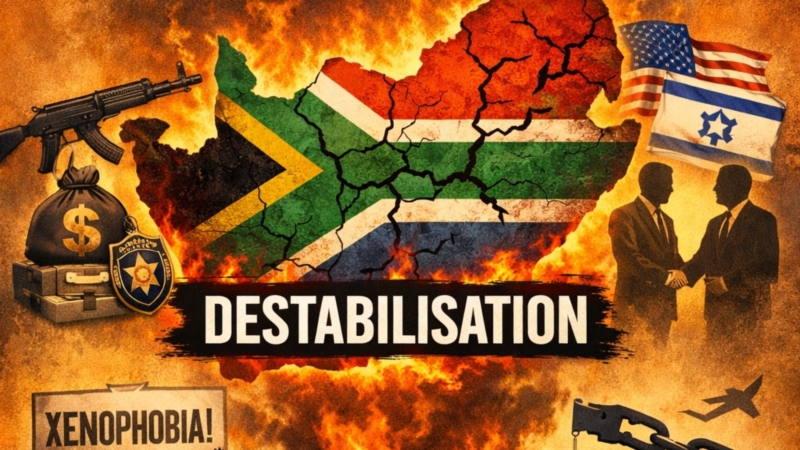
There is a tendency in South Africa to speak of xenophobia as though it were an inexplicable social pathology that periodically erupts before receding once more beneath the surface of public life. That narrative is comforting because it absolves institutions of responsibility. It suggests that xenophobic violence is merely the product of prejudice among ordinary people and that the state is left only to manage the consequences. The events unfolding across South Africa expose the weakness of that account. Xenophobia is not simply a social phenomenon; it has become a constitutional crisis shaped as much by state failure as by the conduct of those who march in the streets. Unless we confront that reality honestly, we will continue to treat the symptoms while allowing the underlying condition to worsen.
Every state has the sovereign right to regulate migration. It may determine who enters its territory, who may remain, and under what conditions. That authority is recognised in both domestic and international law. But sovereignty carries responsibilities as well as powers. A government that claims the authority to regulate migration assumes an equally compelling obligation to administer that system lawfully, efficiently and humanely. It is precisely at this point that the South African state has failed.
For years, the Department of Home Affairs has struggled to provide a migration system capable of clearly distinguishing between asylum seekers, recognised refugees, documented economic migrants and those whose immigration status remains unresolved. Administrative backlogs, inconsistent permit regimes, delays in adjudication and chronic bureaucratic dysfunction have created a climate in which legal status has become increasingly obscured—not because migrants have necessarily acted unlawfully, but because the state itself has failed to administer the law competently. It was therefore only a matter of time before public frustration ceased to distinguish between administrative failure and illegality. Into that vacuum stepped those prepared to reduce every foreign accent to the label of “illegal immigrant.”
The tragedy is that much of the current public discourse rests on a premise that is demonstrably false. Many of those now living in fear are not undocumented migrants. Large numbers of Zimbabwean nationals have lived and worked lawfully in South Africa for years under various permit regimes, including the Zimbabwean Exemption Permit system. Others are asylum seekers or recognised refugees protected by South African and international law. Yet in the public imagination, shaped over years by administrative failure and political rhetoric, legal status has become almost irrelevant. Nationality itself has become sufficient grounds for suspicion.
The consequence has been the normalisation of collective guilt. Individuals are increasingly judged not by their conduct but by their country of origin. Such reasoning is fundamentally incompatible with the constitutional order established in 1994, which rejected the principle that identity alone could determine the rights one enjoys or the protection one receives from the state. South Africa’s Constitution was never intended to protect only citizens from arbitrary treatment. It protects the dignity of every person within the Republic. That is neither accidental nor incidental; it is one of the defining moral choices made by a nation emerging from apartheid.
What has perhaps been most disturbing during the present crisis is not only the growth of xenophobic mobilisation, but the apparent inability of the state to confront it with the clarity demanded by the Constitution. Organised campaigns directed at foreign nationals have spread across communities with remarkable confidence. Public threats, intimidation and hate speech have too often unfolded in plain sight. Instead of an unequivocal assertion that no person may be targeted because of nationality, South Africans have witnessed uncertainty, hesitation and, in some instances, responses that have blurred the distinction between enforcing immigration law and accommodating anti-migrant mobilisation.
No democratic society should become comfortable with such ambiguity. The police unquestionably possess legal authority to enforce immigration legislation where lawful grounds exist. Equally, the state bears a constitutional duty to protect every person from intimidation, violence and discrimination. Those responsibilities are not contradictory; they are complementary. Yet when immigration operations are conducted in circumstances that appear to coincide with, or follow in the wake of, organised anti-migrant campaigns, the perception created is deeply damaging. Even where individual officers act lawfully, the broader message conveyed is that public intimidation has become an effective means of directing state action. Once that perception takes root, the rule of law begins to yield to the rule of the crowd.
These developments also raise difficult questions about the functioning of South Africa’s security architecture. Organised campaigns capable of mobilising communities, identifying migrant populations and generating widespread fear do not emerge in a political vacuum. Whether driven by criminal networks, local political opportunism or broader attempts to exploit social instability ahead of local government elections, such mobilisation ought to have attracted sustained attention from intelligence and law enforcement agencies long before vulnerable communities found themselves sleeping on pavements, open fields and outside diplomatic missions. The failure to anticipate or contain these developments cannot simply be dismissed as an operational oversight; it raises legitimate concerns about the state’s capacity to discharge one of its most fundamental constitutional obligations, namely the preservation of public order while safeguarding the rights of all who live within its borders.
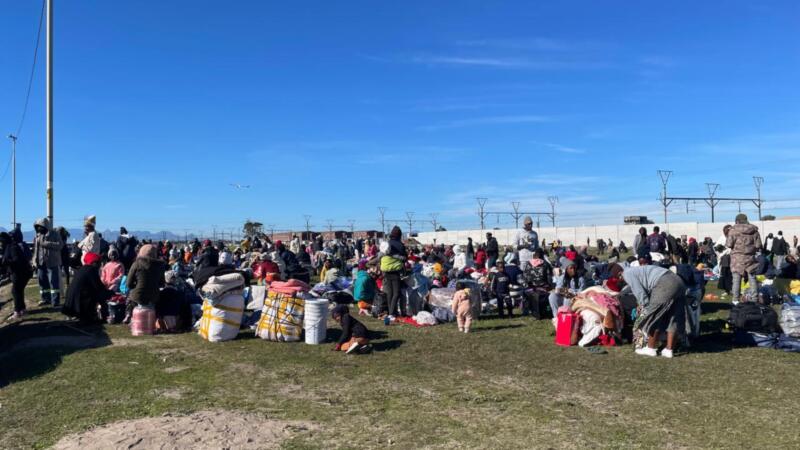
If the failures of migration administration and public security are troubling, the humanitarian response has been devastating. Over recent days, South Africans have witnessed scenes that should never occur in a constitutional democracy. Families have been displaced repeatedly from one temporary location to another with little certainty about where they will sleep the following night. At Gunners Circle in Cape Town, men, women and children have endured bitter winter conditions while sleeping in the open. Similar scenes have unfolded elsewhere, including outside Zimbabwean diplomatic facilities, where vulnerable people have waited in severe weather for assistance that should never have depended on endurance alone. These are not isolated administrative inconveniences. They are manifestations of human suffering that engage the most basic obligations of the state.
That humanitarian response has depended to an extraordinary extent on civil society organisations, churches, volunteers and, above all, Gift of the Givers. Their contribution deserves the gratitude of every South African. Yet their remarkable work also exposes an uncomfortable truth. A constitutional democracy cannot outsource its constitutional responsibilities. Charity may relieve suffering, but it cannot become the mechanism through which the state discharges legal duties imposed by the Constitution itself. The more indispensable humanitarian organisations become, the more evident the state’s withdrawal from responsibilities that cannot legitimately be delegated.
It is against this background that the international community should begin to consider whether the current crisis requires more sustained humanitarian engagement. International refugee and humanitarian institutions exist not to diminish national sovereignty, but to protect human dignity where states are unable or unwilling to do so adequately. When significant numbers of people are displaced by intimidation and violence while remaining within the borders of the state in which they reside, international law recognises that a humanitarian question has arisen. Whether every element of the legal definition of internally displaced persons is ultimately satisfied is a matter requiring careful assessment, but the similarities have become too significant to dismiss. The continued movement of foreign nationals from one temporary site to another, accompanied by fear, insecurity and the absence of durable protection, should concern not only South Africans but the broader international community committed to the protection of human rights.
This also presents South Africa with a profound moral challenge. Our country has rightly earned international respect for insisting that international law must protect civilian populations wherever they are threatened. We have argued before the world’s highest courts that humanitarian principles are universal and that states cannot invoke sovereignty as a defence against grave violations of human dignity. Those principles do not lose their force when the victims are sleeping on South African soil. Indeed, they demand even greater fidelity from us precisely because they are our own professed values. The measure of constitutional integrity is not the eloquence with which we defend human rights abroad, but the consistency with which we uphold them at home.
History will undoubtedly record that South Africa experienced another wave of xenophobic mobilisation. Whether it also records that the South African state became complicit through administrative failure, inadequate protection, humanitarian neglect and responses that blurred the line between constitutional governance and public intimidation depends on what government chooses to do now. The Constitution remains an instrument of profound moral force, a document that does not merely reflect the aspirations of a nation but constitutes its identity. It demands that we see in every person, regardless of origin, a bearer of dignity and rights. The present crisis tests whether that vision can survive the pressures of fear, resentment, and administrative decay. The answer will determine not only the fate of foreign nationals in South Africa, but the character of the Republic itself, whether it will honour the constitutional promise that all who live within its borders are entitled to the protection of its laws, or whether it will betray that promise through neglect and indifference.
The path forward requires more than humanitarian assistance, necessary as that is. It requires a fundamental reorientation of the state's approach to migration one that recognises that the failure to administer the law is itself a form of lawlessness, and that the failure to protect the vulnerable is a betrayal of the constitutional order. The choice is stark: either we defend the humanity of every person within our borders, or we concede that the Constitution's promise extends only to those whose identity we find acceptable. That is not a choice about migration policy; it is a choice about what kind of nation we aspire to be.
Opinion by:
Imraahn Ismail-Mukaddam
Dieector: Inspire Network
SAHRC Monitor
07 July 2026