Women’s Day 2026: From the Women Who Marched for Freedom to Those Who Risk Undoing It
On 9 August, South Africa commemorates Women’s Day, a day that belongs to the memory of thousands of courageous women who stood together in 1956 to challenge apartheid’s oppressive pass laws.
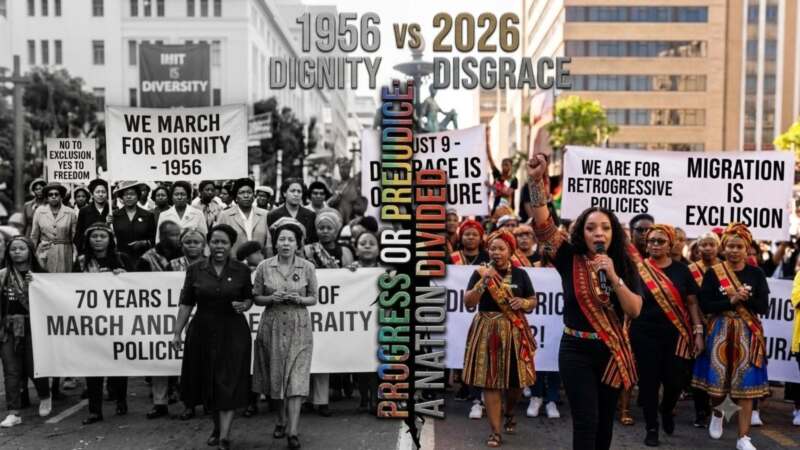
More than 20,000 women marched to the Union Buildings in Pretoria carrying petitions against the dompass, a document that controlled where Black South Africans could live, work and move. They were not simply protesting a piece of paper; they were challenging a system that stripped people of their dignity, separated families and treated human beings as subjects to be controlled.
Their message was clear: no government should have the power to deny people their humanity.
The women of 1956 marched for the dignity of women, but also for the dignity of all oppressed people. They understood that freedom could never be complete if it was built on the exclusion and suffering of others.
Their courage gave birth to the words: “Wathint’ Abafazi, Wathint’ Imbokodo.” You strike a woman, you strike a rock.
But 70 years later, South Africa must confront a painful contradiction.
What would those heroines of 1956 think if they witnessed a 2026 march calling for policies that move us closer to the very systems they fought to dismantle? What would they say about the revival of ideas that judge people by nationality, that demand documents as a measure of belonging, and that turn migration into a justification for exclusion?
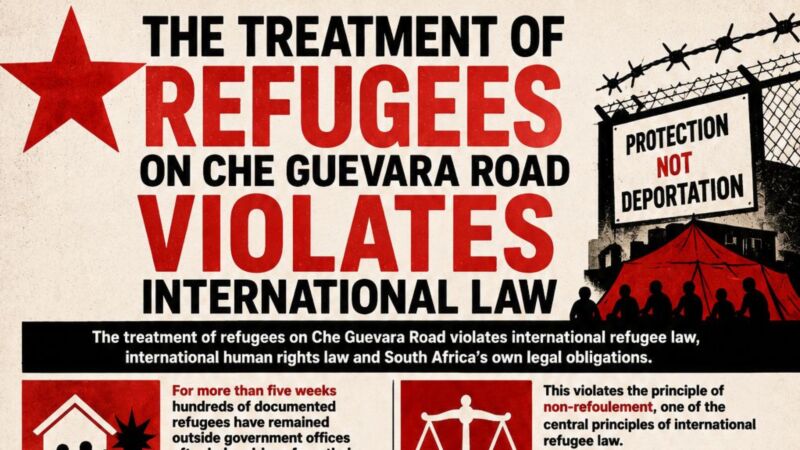
The women of 1956 fought against a system where carrying the wrong document could determine whether you could work, travel or remain in a place. Yet today, we see a dangerous regression where, once again, the simple act of seeking work is being criminalised.
For many migrants and foreign nationals, the ability to earn a living, support their families and contribute to society is being portrayed not as a human aspiration, but as a problem. The tragedy is that work itself, the very foundation of human dignity is becoming a source of suspicion and hostility.
This is the contradiction of our time: in 1956 women marched because they wanted to remove the chains of oppression; in 2026 some are marching for policies that risk placing new chains on vulnerable people.
This is not an argument against lawful migration management. Every country has the right to regulate its borders and enforce its laws. The concern is when documentation, nationality and identity become tools to deny people dignity, opportunity and basic rights.
At the same time, South African women continue to face devastating challenges that demand urgent attention. Gender-based violence remains a painful reality. Mothers carry the burden of unemployment, poverty and a crushing cost-of-living crisis. Many families struggle to afford basic food, and children suffer the consequences through hunger and malnutrition.
These are the battles worthy of the spirit of 1956: the fight against poverty, violence, inequality and injustice.
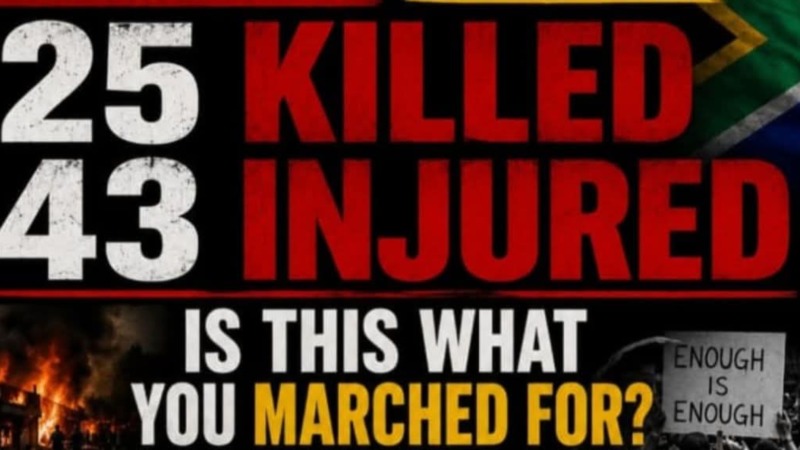
Instead, too often, anger and frustration are redirected towards migrants and foreign nationals who themselves are often vulnerable, while the deeper failures of unemployment, inequality and poor service delivery remain unresolved.
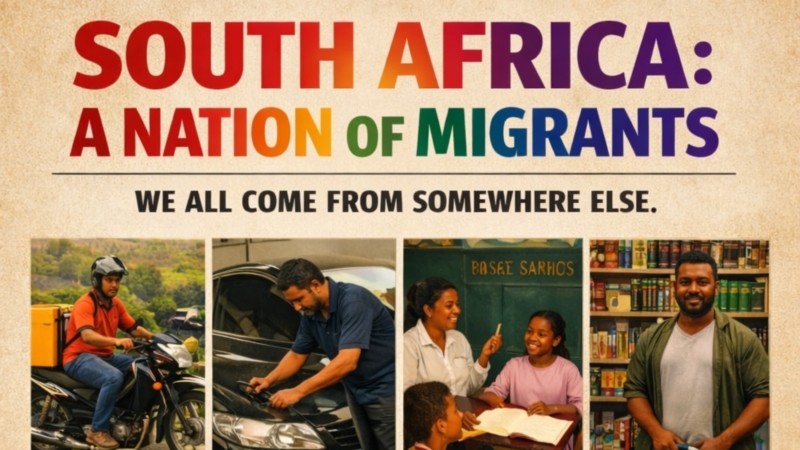
Ubuntu teaches us that “I am because we are.” Pan-Afrikanism reminds us that Africa’s peoples share histories shaped by migration, struggle and solidarity. The borders that divide Africans today were not created by ordinary people, and they should never become tools to turn Africans against one another.
The women of 1956 did not march for a South Africa where dignity belonged only to some. They marched for a country where human rights were respected and where freedom was not determined by race, gender, birthplace or circumstance.
Seventy years later, we must ask ourselves: are we continuing the journey those women started, or are we slowly undoing the very freedoms they sacrificed to achieve?
The greatest tribute to the women of 1956 is not simply to celebrate their courage once a year. It is to defend the principles they stood for every day: dignity, equality, freedom and the belief that every human being deserves to be treated as human.
Because the greatest danger is not only forgetting history, it is repeating the injustices that history taught us to reject.
©IMRAAHN ISMAIL-MUKADDAM
09 August 2026